

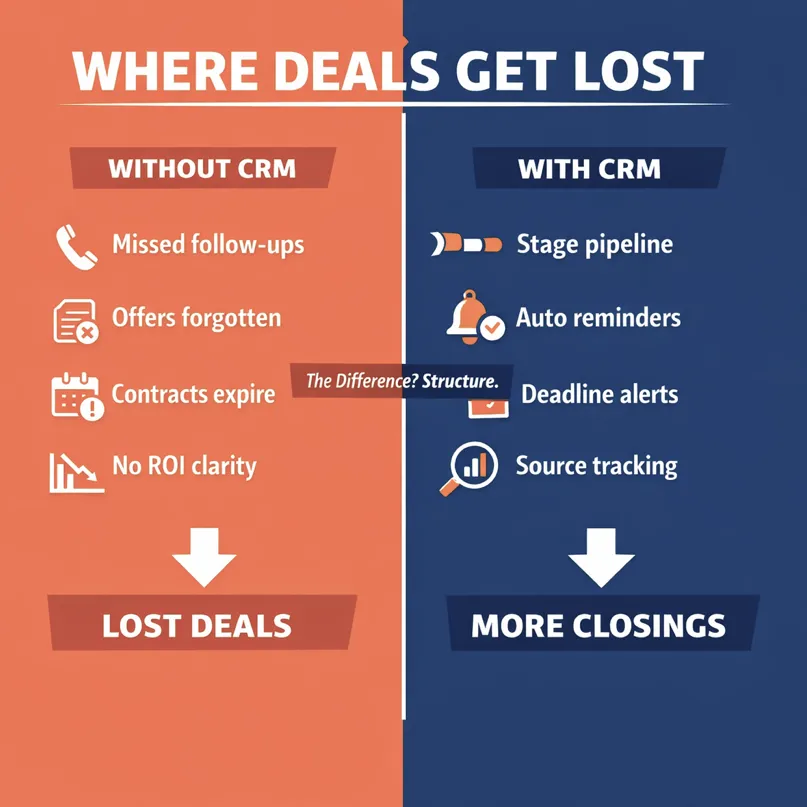
How Does CRM-Based Deal Tracking Help Real Estate Investors Close More Deals?
Deals in real estate investing fall apart quietly. It happens when a callback gets pushed to tomorrow or when an offer follow-up gets delayed. If 30-50 leads are sitting in your inbox a little too long then you are losing revenue. This gap can be filled with a real estate investor software solution.
CRM-based deal tracking becomes your operational infrastructure.
Deal volume brings complexity with more conversations and more properties. What used to be manageable in a spreadsheet or notebook quickly becomes scattered across texts, emails and team members.
A properly structured real estate wholesale CRM maps your entire acquisition process and tracks movement across stages. For serious investors, this separates random closings from predictable monthly revenue.
What is deal tracking in REI CRM
Deal tracking means you can open your dashboard and instantly see:
• Which leads just came in
• Who was contacted
• Which properties are under analysis
• Where the offers are sitting
• Which contracts are close to expiring
• What’s closing this month
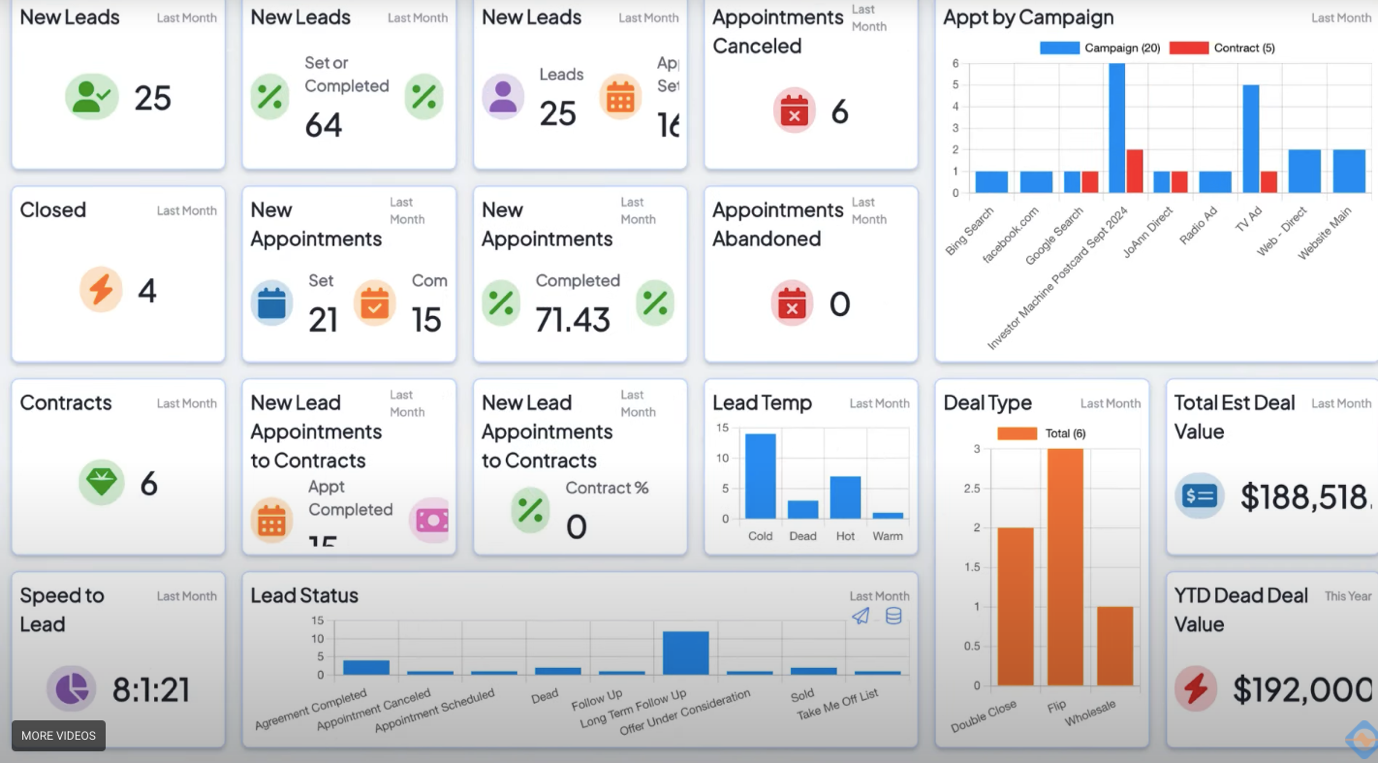
Figure 1: Manage leads effortlessly and see each deal stage at a glance
Each opportunity sits in a defined stage. And that structure changes behavior.
How This Works Inside Pete REI CRM
Pete is a CRM software for real estate investors where deal tracking is built around a stage-based pipeline.
A common workflow looks like this:
Lead Captured → Contacted → Analyzed → Offer Sent → Contract Signed → Assignment Sent → Closed / Lost
Every deal must live in one of these stages. That clarity alone eliminates confusion.
What features should real estate investors look for in an effective REI CRM?
The CRM should have pipelines matching your deal process. Users should be able to see where every lead stands at a glance.
Make sure you don’t have to use multiple apps to track calls, texts, and emails. All these should be tracked inside a system. Finally, you should have automation for follow-up reminders.
Scenario 1: The “Offer Sent” Problem
Without structured tracking:
You sent 8 offers this week. By next week, some sellers respond and a few completely fall off your radar.
Inside Pete:
All 8 offers sit in the Offer Sent column. You filter that stage instantly and schedule follow-ups directly from the deal record.
You control the follow-up rhythm without hoping for seller callbacks. Consistent follow-up alone can significantly increase contract conversions.
Where Investors Lose Revenue (System Gaps)
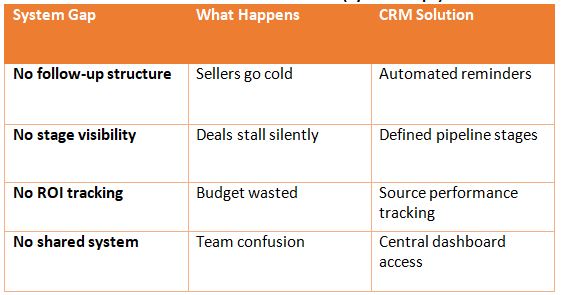
The table shows the common system gaps that quietly drain revenue. Structured tracking with an REI CRM fixes them.
Scenario 2: Contract Management Without Surprises
In other industries, contracts move based on memory and scattered reminders. But in real estate, you have Pete REI CRM. It is the automated solution to set task reminders and monitor expiring deals.
You can have system-driven deadlines that reduce last-minute scrambling and protect deals already under contract.
Scenario 3: Tracking Lead Source ROI
Marketing without analysis is expensive. A CRM comes with a lead source field for every lead profile for you to review.
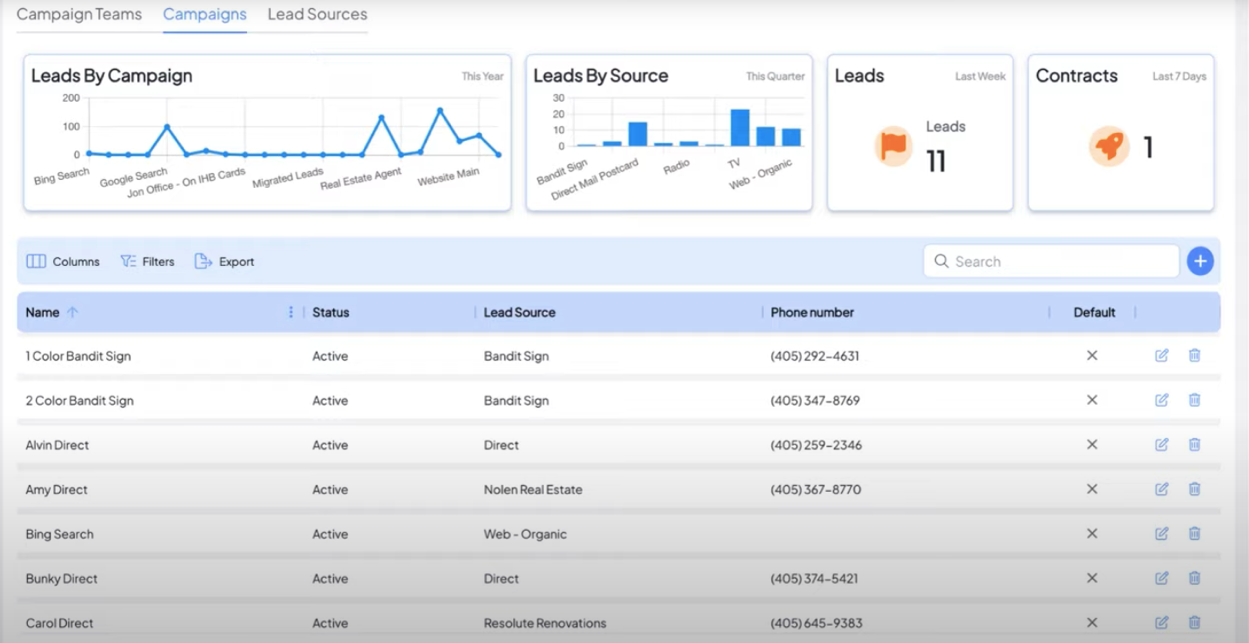
Figure 2: CRM analytics to review the efficiency of lead sources
You can analyze how many deals were closed from Facebook Ads, Bandit signs, cold calling or referrals. Your budget decisions can be backed by numbers.
Over time, reallocating budget toward proven sources directly increases deal volume.
Why Structured Deal Tracking Increases Closings
There are three core reasons for using the best CRM for investors. You can have a structured deal closing process which eventually brings follow-up discipline. It can expose stalled deals and connect revenue to marketing sources.
Investors already have enough leads, what they need is better control. A system where everything is visible and closing percentages are rising naturally.
According to industry data, investors using REI CRM automation often see significantly higher conversion rates compared to those managing deals in spreadsheets.
Still relying on volume instead of systems? Read this blog next: [Stop Chasing Leads, You Need a Better REI CRM].
Team-Based Example: Shared Visibility
Imagine you have a small team where someone negotiates acquisitions and someone manages market contracts or paperwork.
Information gets siloed without centralized tracking. But inside Pete REI CRM, your team can see:
• Current deal stage
• Notes from previous conversations
• Next assigned task
• Attached documents
An aligned team shortens turnaround time between stages. Faster transitions complete more deals per month.
Does deal tracking help scale a wholesaling business?
Your team can handle more leads when the workflow is structured and automated. You can enjoy a predictable growth without increasing chaos.
What Happens Without Proper Deal Tracking?
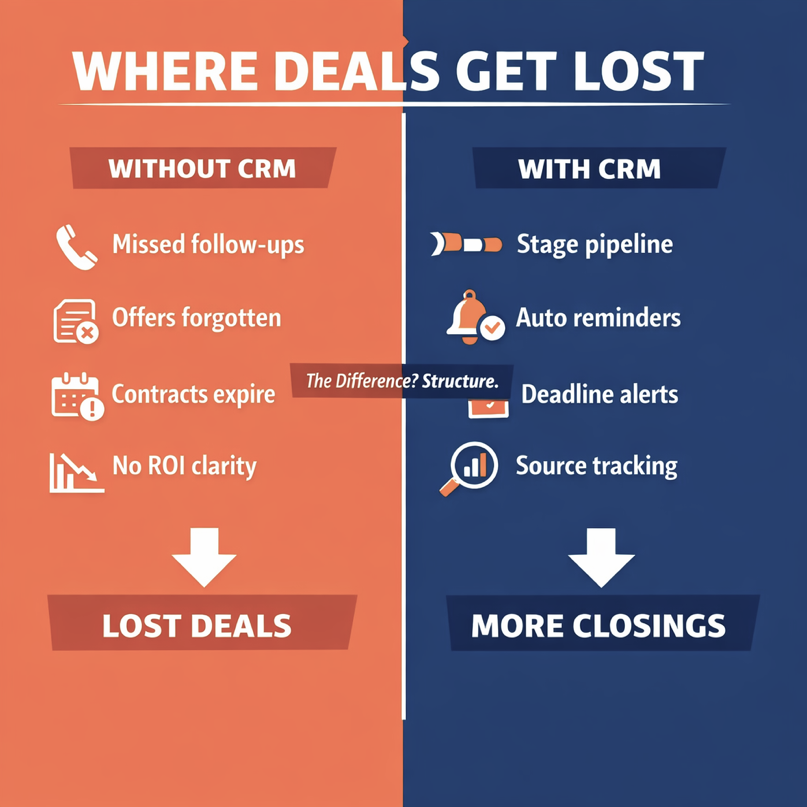
Investors who cannot close more deals often blame market conditions. In reality, weak systems are usually the issue. It is just poor tracking that can cause the following situations:
• Follow-ups become inconsistent
• Hot sellers cool down
• Offers sit too long
• Marketing ROI becomes unclear
• Team coordination weakens
How does CRM deal tracking improve close rates?
It keeps every opportunity in a defined stage. CRM also schedules follow-ups automatically and makes deals visible so you can close them before they stall.
Conclusion
You cannot close more deals if you start chasing more leads. You need to manage the ones you already have.
CRM-based deal tracking inside a CRM software for real estate investors like Pete gives you control over every stage of the pipeline.
You start operating efficiently when you know where every deal stands. And that’s when growth becomes predictable. If you want to see how structured deal tracking works in real time, book a demo today and experience it for yourself.
FAQs
1. Why do real estate investors lose deals even when they have enough leads?
The number of leads is not the problem. Most lost deals happen because of weak systems. Opportunities go away silently when follow-ups aren’t scheduled, offers aren’t tracked, or contracts aren’t monitored. A structured CRM reduces these gaps.
2. How does a Real Estate Wholesale CRM improve marketing ROI?
A Real Estate Wholesale CRM tracks lead sources for every deal. Investors can see which channels actually produce contracts. They can reallocate budget toward marketing that generates revenue instead of just inquiries.
3. Can deal tracking help forecast monthly revenue?
Investors can see what’s likely to close this month when every opportunity sits in a defined stage. This visibility makes revenue more predictable. Stop depending on random closings when you can be among the top real estate wholesalers in the US. Connect with us or browse the pricing plans of Pete REI CRM to make an informed decision today.
4. Can a Free CRM for Real Estate Investors handle wholesale deal tracking?
Free CRMs may store contact data, but most lack structured pipelines and automation. Manual systems often create gaps when lead volume grows. So relying on memory or a poor free CRM can reduce closing percentages.
5. Is deal tracking necessary for small real estate investing teams?
Even small teams benefit from shared visibility and centralized deal stages. Structured tracking prevents missed follow-ups and keeps everyone aligned as the business grows.
6. How is a Real Estate Investor Software Solution different from using spreadsheets?
Spreadsheets are only used for storing data. You cannot use them to manage deal movement. A real estate investor software solution like Pete provides stage-based tracking. You get automated follow-ups, deadline alerts, and features that offer team visibility. It is easier to move deals from lead to closing when you don’t rely on your memory or spreadsheets.