
The Real Estate Tech Stack That Scales From 3 Million to 10 Million with Casey Gregerson
Casey Gregerson is a former Shell petroleum engineer who went full time in real estate four years ago and now runs a vertically integrated operation of 450-plus units spanning acquisitions, construction, property management, and a capital fund. He hosts the Rags to Riches podcast and has a book coming through Forbes in Q1.
In this episode Casey walks through his constantly evolving real estate tech stack and how AI is reshaping it, from using an AI agent to absorb VA work, to centralizing every communication in one hub, to the hard rule he uses so the stack never bloats. If you are a real estate investor or a W2 professional trying to scale with systems and AI without burning out your team, this conversation is built for you.
Timeline Summary
[1:02] – Host restarts and introduces Casey, a petroleum engineer turned full-time real estate investor
[1:22] – Ten years at Shell working two weeks on, two weeks off on oil rigs and frac spreads
[2:11] – How two weeks off every rotation funded flipping houses and buying rentals
[2:33] – Leaving his W2 four years ago and why your W2 is a superpower
[3:48] – Property management stack journey from Google Sheets and Venmo to Buildium to Rent Manager
[4:45] – Introducing Victor, the AI agent taking over VA tasks like flip profitability tracking
[7:36] – How a peer cut ten virtual team members in a week after adopting the same AI
[9:22] – Telling the team to double output with AI on the path from 3 million to 10 million
[10:53] – Why moving too fast on new tools quietly burns out your team
[11:32] – His biggest mistake, getting oversold on AI that over promises and under delivers
[12:31] – Building a centralized hub and spoke system you control as AI keeps changing
[14:03] – Why pulling all communication into one place moved the needle most
[17:03] – The free six-minute Lead to Close Health Check at leadtoclosetest.com
[19:33] – The multifamily opportunity in markets still doing leases by hand
[22:01] – Rapid fire begins: start before you are ready, find a mentor, and fail forward
[24:29] – The one tool he could not run his business without
5 Key Takeaways
Subtract Before You Add — Casey's rule is that every new tool requires killing an old one. When Slack became the communication hub, Voxer got cut, so the stack never bloats.
AI Should Multiply, Not Replace — Instead of cutting staff after adopting an AI agent, he asked his team to double their output, targeting a jump from 3 million to 10 million in revenue with the same people.
Beware the AI Oversell — His costliest mistake was paying for a custom AI build that over promised and never shipped before the market moved past it. Favor tools that work now over promises of what is coming.
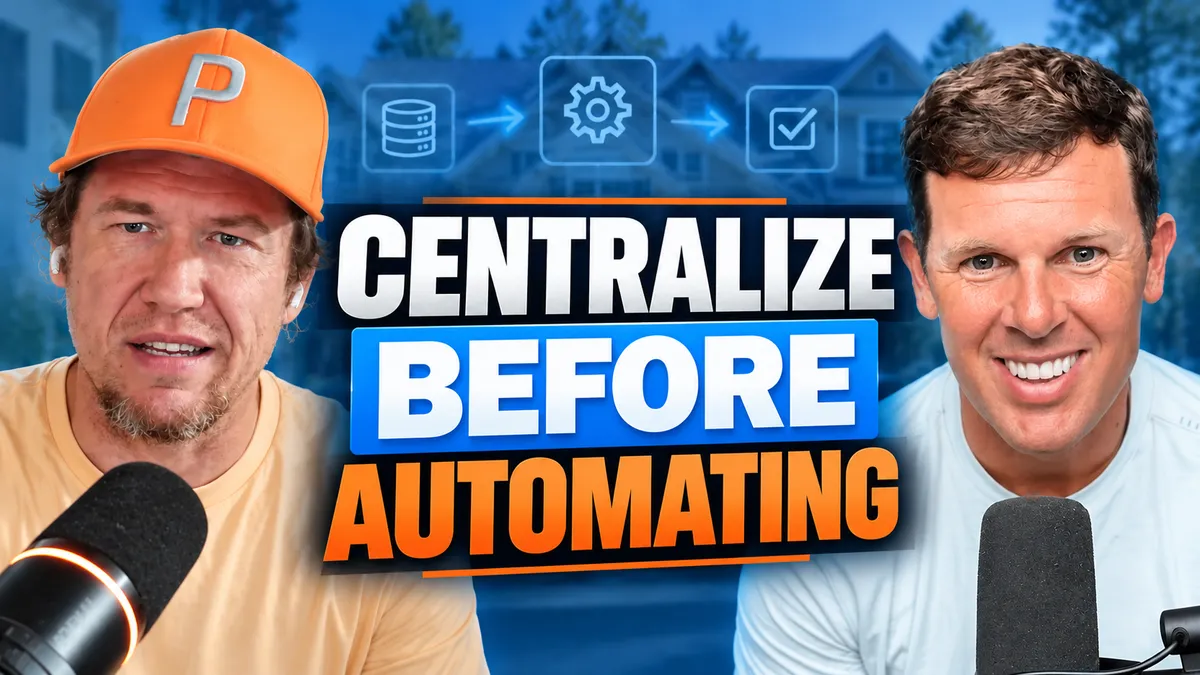
Centralize Before You Automate — Funnel every communication and data source into one hub first. Once the information lives in one place, AI can actually pull from it and do real work.
Track Time and Money Saved — A tool only earns its place if you measure it. Casey has his team log what each AI task costs and how much time it saved, so adoption is a decision, not a hunch.
Links & Resources
Lead to Close Health Check, Pete's free assessment — https://leadtoclosetest.com
Pete REI software — https://peterei.com
Casey Gregerson's website, with book updates, the free webinar, and his 12-module course — https://caseygregerson.com
Enjoyed This Episode?
If Casey's "subtract before you add" rule made you look twice at your own tech stack, do not keep it to yourself. Send this episode to the operator or partner who keeps piling on new software without ever cutting the old stuff. And if the Pete Podcast keeps earning your time, follow the show, drop a rating, and leave a quick review so more investors can find it.