

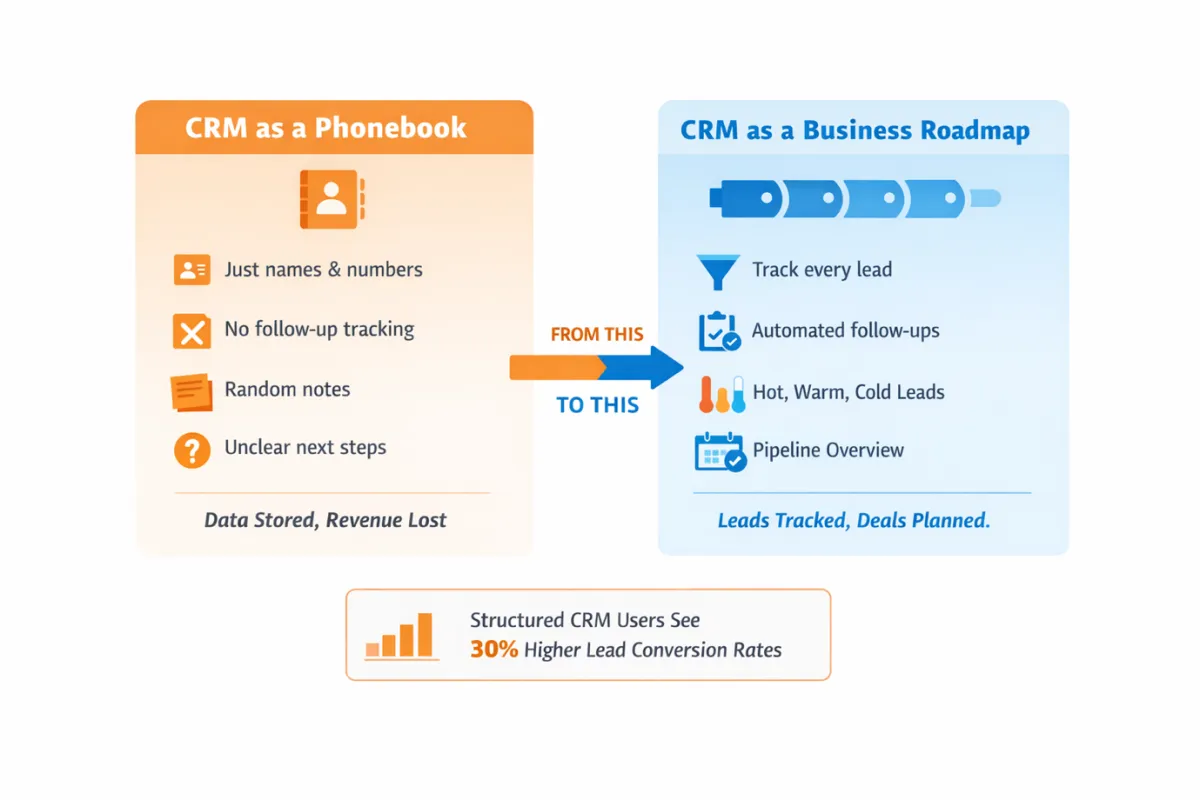
What Are CRM Systems in Real Estate Wholesaling and Why Do They Matter?
Wholesalers who have ever forgotten to follow up with a motivated seller already know the pain. Leads come in daily in real estate wholesaling. Since it moves fast, conversations can pile up and the deals can fall apart over small mistakes.
That’s where REI CRM systems come in.
In real estate wholesaling, a CRM is simply the system that keeps your business from falling apart as leads start coming in. The best CRM for real estate investors can remember who you talked to and when to follow up. Without it, things get messy fast and cost money.
What is a CRM System in Real Estate Wholesaling?
CRM software is the command center of your wholesaling business. Instead of struggling with spreadsheets, sticky notes, and random texts, you get a structured system to track everything.
An REI CRM in wholesaling can be used for:
Capturing seller leads
Tracking follow-ups
Managing deal stages
Organizing buyer lists
Keeping notes on every conversation
Growth can turn into chaos for wholesalers. CRM organization makes deal progress visible so that you get a definite structure behind a serious wholesaling operation.
What does a CRM system do for real estate wholesalers?
Wholesalers can capture leads, track communication and manage follow-ups using a CRM. This can also be a tool for monitoring deal progress in one centralized platform. Wholesalers can prevent lost leads and increase deal closings by using the right REI CRM.
Why CRMs are beneficial for wholesaling than Traditional Real Estate
Retail agents may work a handful of listings at a time. Wholesalers often manage dozens of seller conversations every week. Therefore, their speed and capability to follow up makes it even more essential to have a CRM.
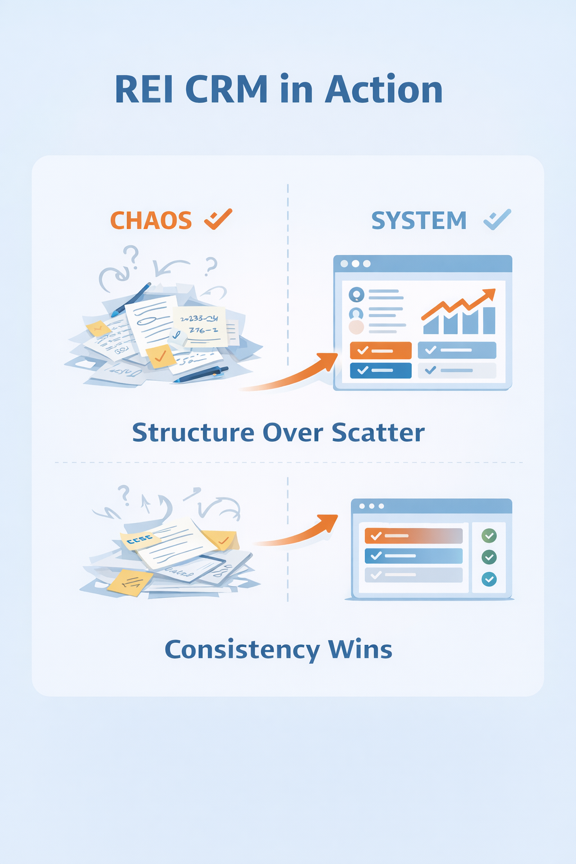
Figure 1:Use of REI CRM in Wholesaling
Let’s read why CRM systems in real estate wholesaling are essential:
1. Follow-up consistency
According to industry sales data, deals don’t close on the first call. Situations change seller motivation and then you will need CRM to help you with:
Scheduling follow-ups
Setting reminders
Tracking communication history
Knowing exactly when to reach out again
You will have to rely on memory if you don’t have a system, and memory costs money.
If you want to see how experienced investors handle massive lead volume without missing callbacks, read How Top Wholesalers Never Lose Follow-Ups Even With 1,000+ Leads.
2. Growing lead volume
Increased marketing means increased lead flow through cold calls or text campaigns. This can make things messy if you don’t have a structured system to log and categorize leads.
A CRM allows wholesalers to tag leads and prioritize hot prospects. When you can track source performance, you get the clarity to double down on what works.
3. Deals through stages
Wholesaling pipelines have many stages like new, contacted, appointment set, contract signed or closed.
The best CRM for investors keeps every deal visible in its current stage. You instantly see where revenue is coming from.
What Makes a CRM Different From a Spreadsheet?
A spreadsheet can only be used to store data but you can manage relationships with a CRM.
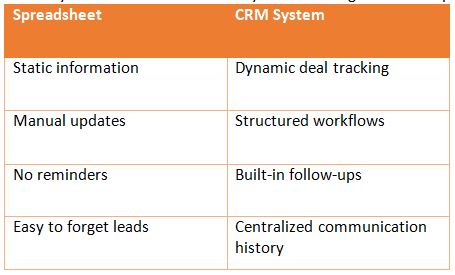
Spreadsheets are manageable for 1–2 deals a month. But they break when the volume increases.
Why can’t wholesalers just use Excel?
Excel can store contact data but it lacks follow-up automation. You cannot have structured workflows and real-time deal visibility from spreadsheets. You need CRM features to scale that you can only get from a purpose built software like Pete REI CRM.
How Pete REI CRM supports Real Estate Wholesalers
When choosing a CRM, you should only pick a platform built specifically for investors. A tool useful to generic sales teams might not be great in wholesaling.
Pete REI CRM is designed for real estate investors and wholesalers who need structure without complexity.
Organize seller and buyer contacts: Keep a neat list so you can quickly find what you need.
Track deal progress clearly: See clearly what the next steps should be.
Manage follow-ups consistently: Get reminders so you never forget to call or text.
Keep communication notes centralized: Save all your important messages in one place.
Monitor pipeline activity: Watch your deals from new lead to closed.
Pete REI CRM is built for real estate investors. It has the workflow that aligns with how wholesaling actually works.
You should not force-fit a general CRM into an investor business model. Operate like a top-tier investor instead of chasing scattered leads. Book a demo of Pete REI CRM and build your wholesaling business on a solid system.
How a CRM Improves Team Performance
A CRM protects the time of a solo wholesaler. But it also protects the accountability of a team.
A structured system is very helpful. There will be no guessing or duplicate work when you have a team working for you.
Acquisitions managers log notes after calls
Dispositions managers track buyer interest
Admin teams see deal status in real time
Everyone operates from the same dashboard.
Is a CRM necessary for small wholesalers?
Even small wholesalers benefit from structured lead management. Missed follow-ups will not haunt you if you have a CRM. You can keep your deals organized and build strong systems from day one.
When Should You Start Using a CRM?
The honest answer?
Start researching for the best CRM software for real estate investors before you think you need one.
Many wholesalers wait until they feel overwhelmed. By then, they have to struggle with scattered leads and lost opportunities.
Implementing a CRM early builds strong habits and strong businesses.
Common Mistakes Wholesalers Make Without a CRM
Using a generic or a free CRM for real estate investors won’t really provide you with a structured system. Soon, you will notice mistakes start stacking up.
Sellers never hear back: You wanted to follow up with a motivated seller but the name got buried under new leads.
Follow-ups happen too late: Follow-ups can be tragic without a clear reminder system. Too early or too late, both can get you in trouble.
Buyer lists stay unorganized: Unstructured buyer information can make dispo stressful. You have to figure out on your own who is ready at this price range or who you talked to last month.
Team members duplicate tasks: Things can overlap between the acquisitions manager and the dispo manager.
According to the latest sales research, over 70% of deals require multiple follow-ups before closing. Without a structured CRM, many of those opportunities are simply lost.
This mistake can cost thousands over time. CRM systems in real estate wholesaling protect against these mistakes.
If you’ve ever wondered how small system gaps quietly drain profit, read The Hidden Cost of Poor CRM Management in Wholesaling.
How CRM Systems Help With Scaling
You can scale easily when you can build repeatable processes. A CRM supports scaling by creating consistent workflows.It allows delegation and communication without confusion.
Growth becomes manageable when everything is logged and visible.
How do you find the Best CRM Software for Real Estate Investors
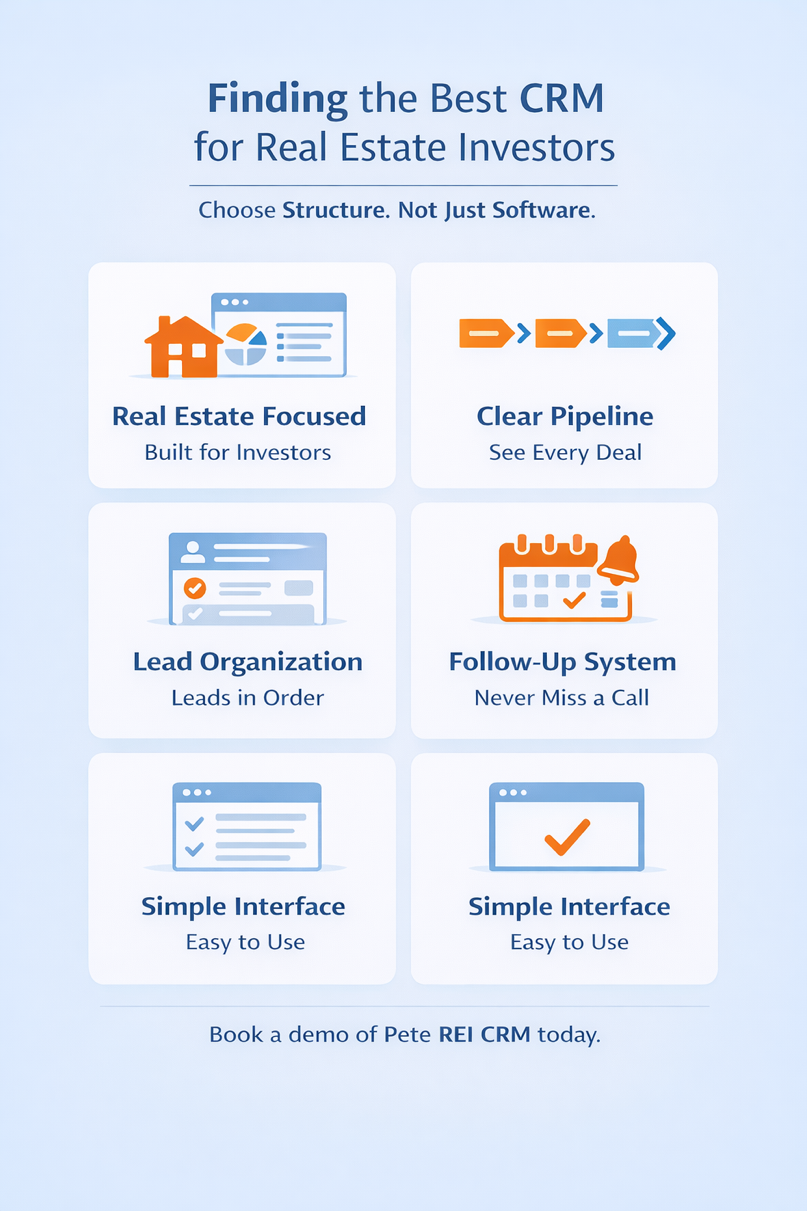
Figure 2: What to look for in the best CRM for Real Estate Wholesaling
You must evaluate options because not all CRMs are built the same.
Real estate–focused design: It should not have random sales pipelines that don’t match leads, contracts and buyer lists.
Clear pipeline views: You should get instant information about leads that are new or leads that are ready to close.
Easy lead organization: It should pull up the seller info and conversation history in seconds.
Simple follow-up tracking: The system should remind you who to call today.
Straightforward user interface: You do not need endless hours of training videos to get started.
Figure 3: Top players of the real estate market who realized the worth of a purpose built REI CRM
Pete REI CRM is structured specifically for real estate investors who want simplicity. It does not come with unnecessary sales features or complexity.
If wholesaling is your business, your CRM should reflect that.
Conclusion
The secret to successful wholesaling is speed and discipline. Therefore, CRM systems are crucial in real estate wholesaling. They bring structure to a fast-moving business model.
If you are serious about your wholesaling business, it’s time to stop relying on memory and spreadsheets.
Start building your pipeline the right way. Get a demo of Pete REI CRM to create a system that works as hard as you do.
FAQs
1. What are CRM systems in real estate wholesaling?
CRM systems in real estate wholesaling are software tools that help investors organize seller leads, manage follow-ups, track deal stages, and maintain buyer lists in one centralized system.
2. Why do CRM systems matter for wholesalers?
They matter because wholesaling depends on fast response times and consistent follow-up. A CRM prevents lost leads, keeps deals organized and improves closing rates.
3. Can new wholesalers benefit from using a CRM?
New wholesalers benefit from structured lead management early on. It builds good habits and prevents missed opportunities.
4. How does a CRM manage multiple deals at once?
A CRM displays deals in different pipeline stages. This way, wholesalers can see progress and monitor contract movement clearly.
5. What should I look for in a CRM for real estate wholesaling?
Look for a CRM designed for investors. It should have clear pipeline tracking, easy contact management, and simple follow-up organization.